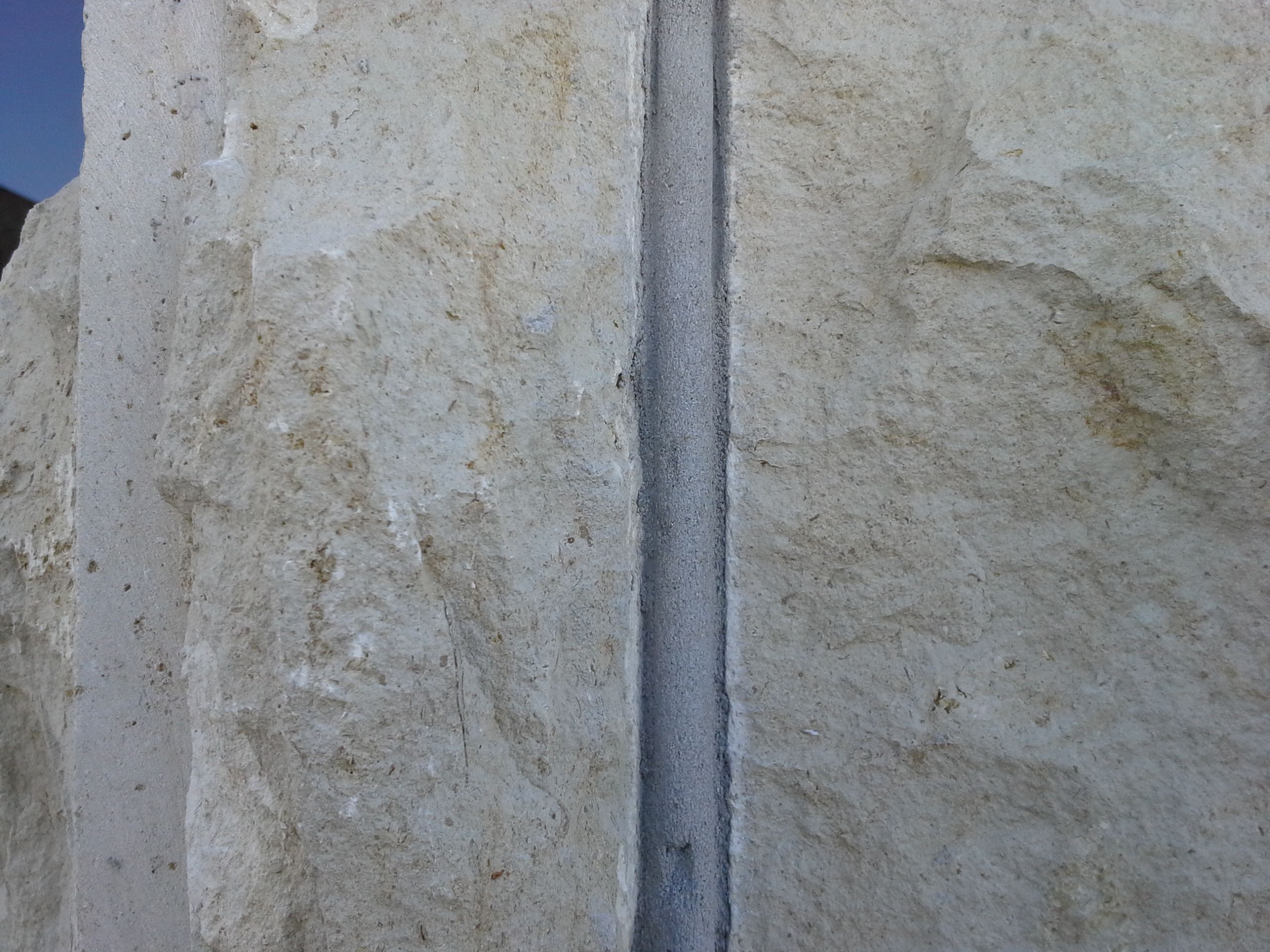
A finish is the final treatment of the stone surface. It sets the sheen, colour depth, texture and slip behaviour — so it should be chosen together with the application.
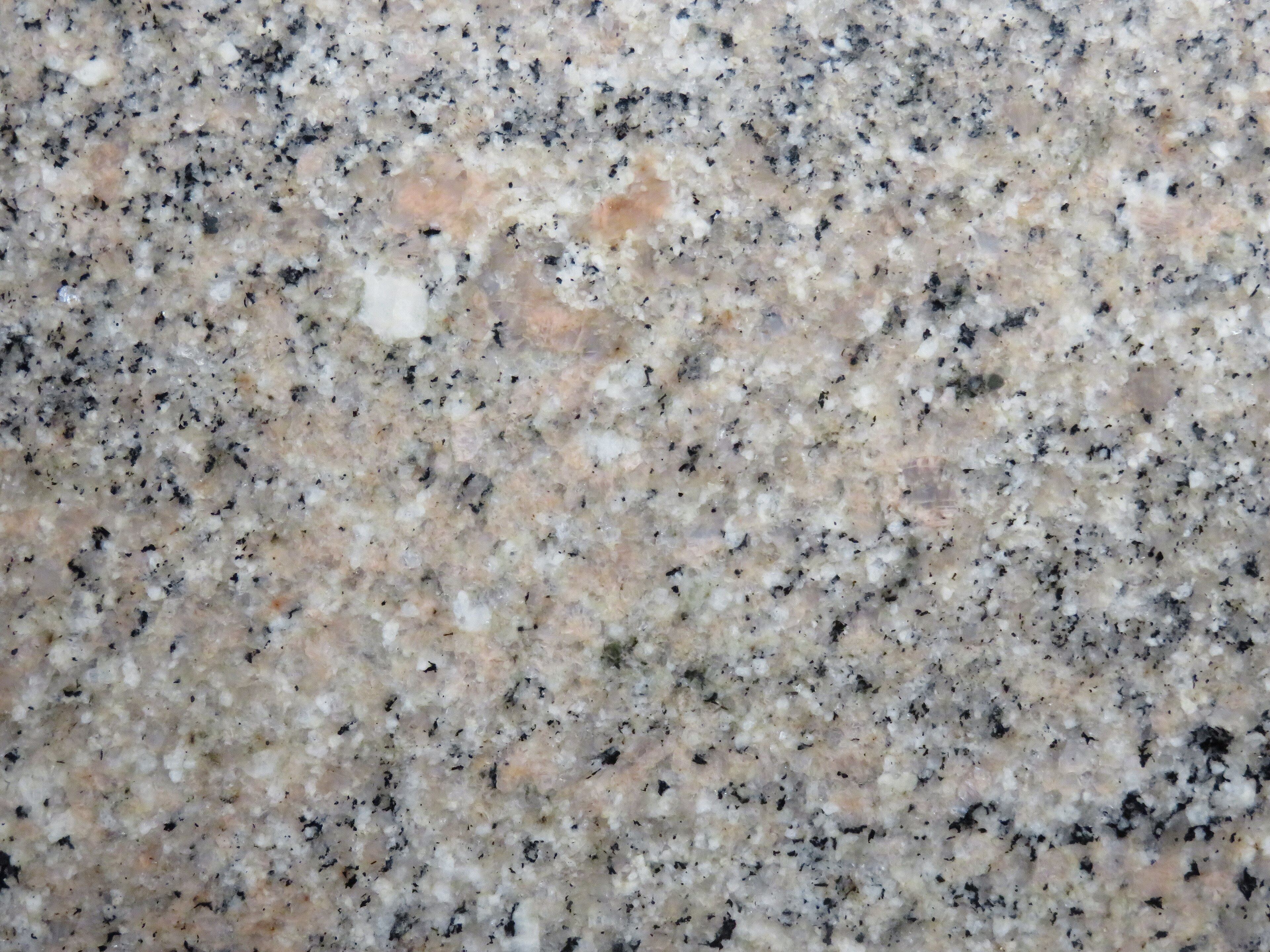
Polished finish — generic granite, not an Egyptian variety · Laurent Bélanger, CC BY-SA 4.0, via Wikimedia Commons
01
Polished
A mirror-like gloss that deepens colour and reveals every crystal.
Process
The sawn surface is ground with progressively finer abrasive heads until it reflects light. No coating is applied — the shine comes from the stone itself.
Surface texture
Smooth and glassy to the touch.
Visual effect
Highest colour saturation and contrast; mineral grains appear sharp and three-dimensional.
Slip behaviour
Slippery when wet. Best kept to dry interior floors, walls and worktops.
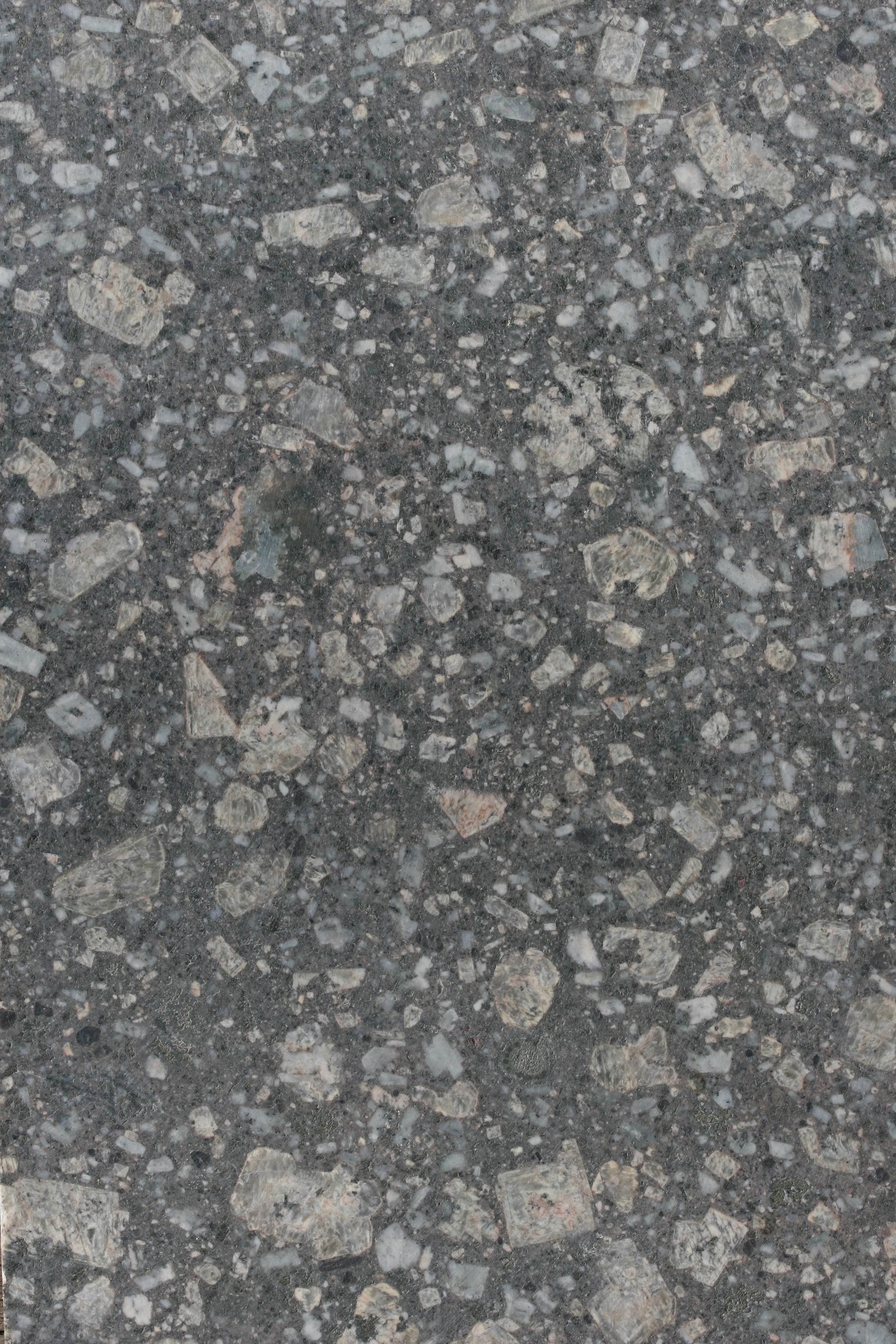
Honed finish on a granite porphyry sample (Germany) · Reiner Flassig (Flassig Reiner at de.wikipedia), CC BY-SA 2.0 de, via Wikimedia Commons
02
Honed
A smooth, satin-matte surface with a calm, contemporary look.
Process
Grinding stops before the final polishing stages, leaving a flat surface with little or no reflection.
Surface texture
Smooth but not glossy; soft and velvety.
Visual effect
Colours read lighter and softer than polished; pattern is visible but understated.
Slip behaviour
More grip than polished but can still be slippery when wet — check a tested slip value for wet areas.
Suitable uses
Interior floors, stair treads indoors, bathrooms, worktops where a matte look is preferred.
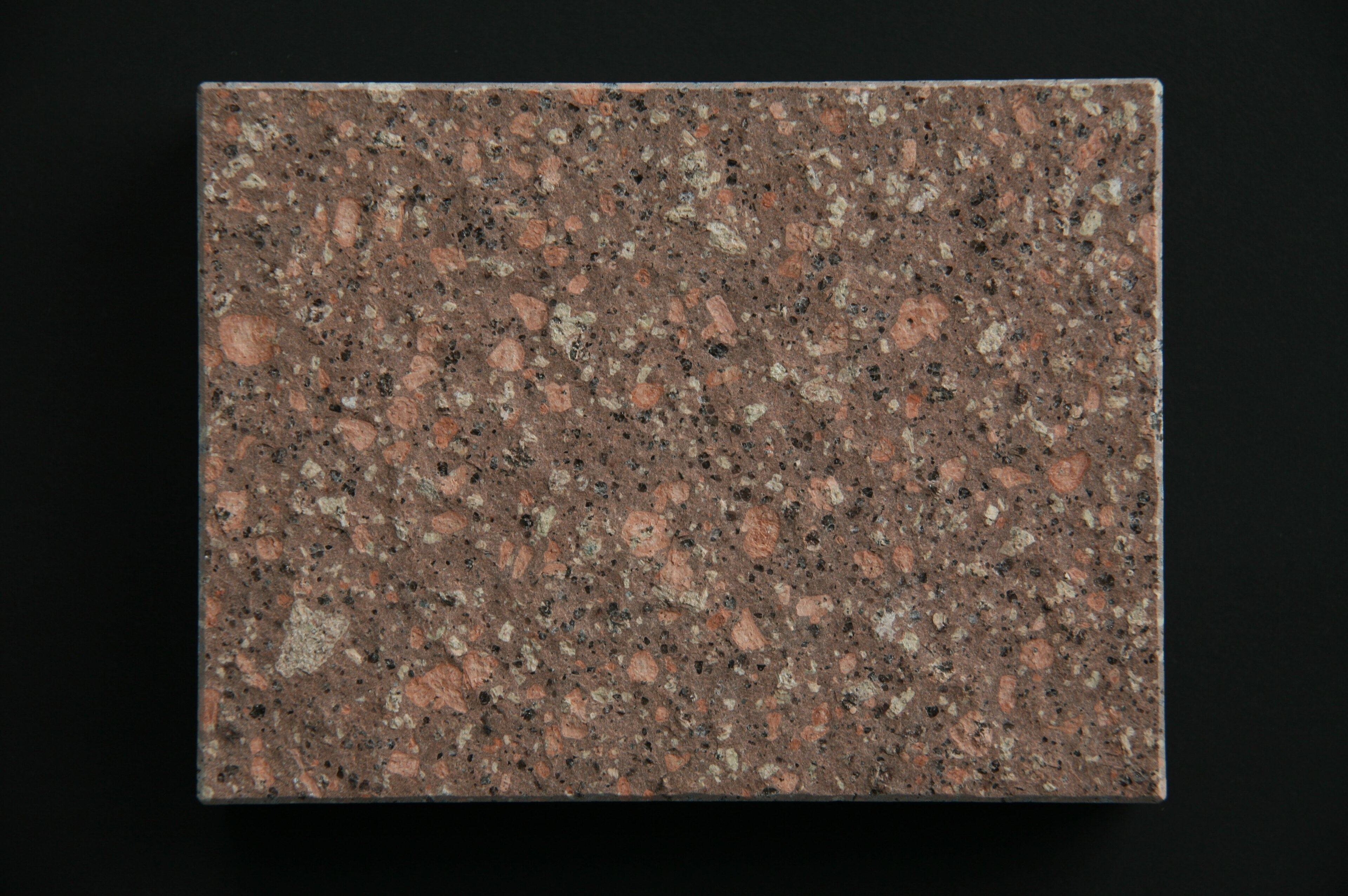
Flamed finish on Löbejün porphyry (Germany) · Benhoff, CC BY-SA 3.0, via Wikimedia Commons
03
Flamed (Thermal)
A rough, crystalline texture created with intense heat — a classic for exterior paving.
Process
A high-temperature flame is passed over the surface; some crystals expand and flake off, leaving an irregular, slightly glittering texture. Usually applied to slabs of adequate thickness (commonly 2 cm and above) to withstand the thermal shock.
Surface texture
Rough and uneven, with fine relief.
Visual effect
Colours become lighter and more muted; a natural, rustic appearance.
Slip behaviour
Good slip resistance — widely used for exterior and wet areas.
Suitable uses
Exterior paving, plazas, pool surrounds, external stairs, façades.
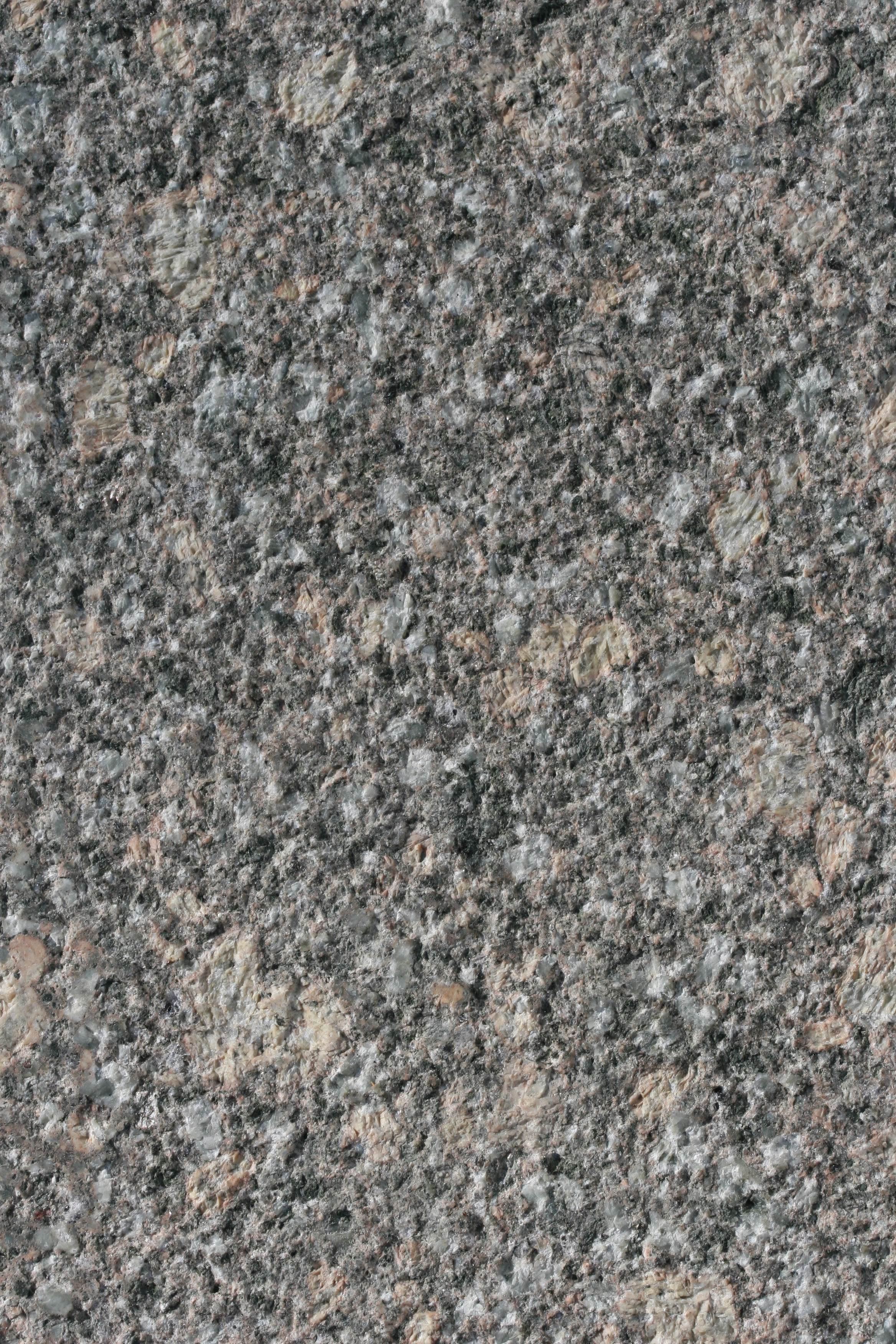
Bush-hammered finish on granite porphyry (Germany) · Reiner Flassig, CC BY-SA 2.0 de, via Wikimedia Commons
04
Bush Hammered
A uniformly pitted surface with strong grip and a sculptural, architectural feel.
Process
A hammer head with pyramid-shaped points strikes the surface repeatedly, mechanically or by hand, creating small, even indentations.
Surface texture
Coarse, pitted, evenly rough.
Visual effect
Light, matte, stone-dust appearance; pattern is softened.
Slip behaviour
Very good slip resistance.
Suitable uses
Exterior steps, public squares, ramps, landscaping elements, façades.
Verified finish photograph pending
05
Sandblasted
A fine, even, matte texture produced by abrasive blasting.
Process
Sand or another abrasive is blasted at the surface under pressure, removing a thin layer and leaving a uniform granular texture. It can also be used through stencils for patterns or lettering.
Surface texture
Finely rough, like coarse sandpaper.
Visual effect
Soft, matte and slightly lighter in tone.
Slip behaviour
Improved grip compared with honed surfaces.
Suitable uses
Exterior cladding, paving, signage and decorative detailing.
Verified finish photograph pending
06
Brushed / Leathered
A soft, undulating texture with a gentle sheen — tactile but easy to clean.
Process
Abrasive brushes (often diamond or silicon-carbide filaments) work the surface, wearing softer areas slightly more than hard crystals. Often applied after flaming or honing.
Surface texture
Gently undulating, leather-like.
Visual effect
Rich colour with a low, satin lustre; hides fingerprints and water marks well.
Slip resistance depends on the stone, finish quality and conditions. For public and wet areas, specify a tested slip value to your local standard. Illustrative photograph — not an ALAGAWANI project and not necessarily an Egyptian stone.
Contact
Discuss your project
Send us the stone, finish, dimensions and quantity you need — we will reply with availability and a quotation.